
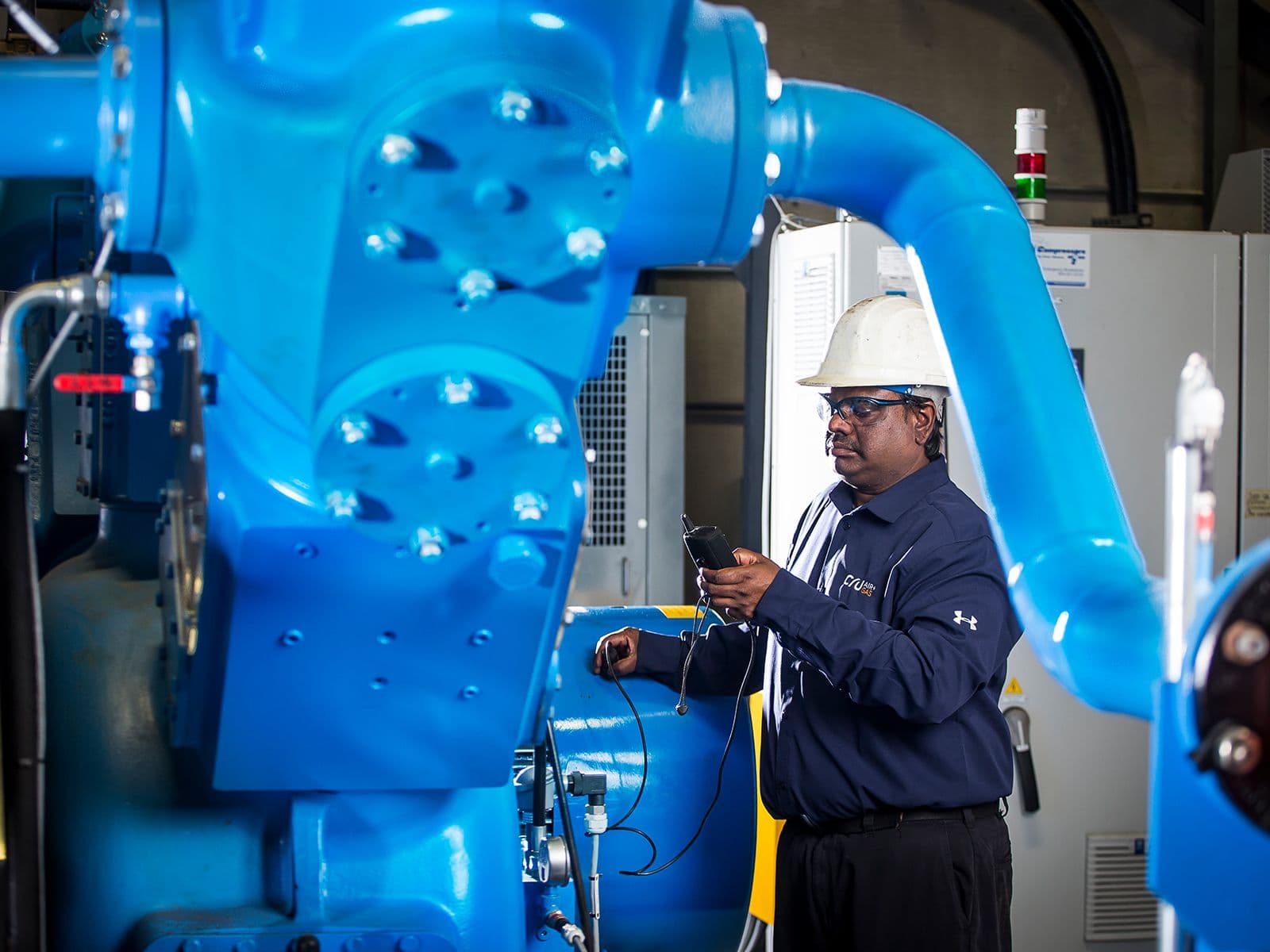
Choosing the correct size for your air compressor is essential for saving energy, ensuring your system works reliably, and avoiding unnecessary expenses. Many industrial facilities make the mistake of using compressors that are either too big, which wastes power, or too small, which can cause problems with air supply and pressure. An incorrectly sized compressor can hurt how well your operations run, increase maintenance costs, and shorten the life of your equipment.
(For a broader overview of selecting the right compressor type and power source, refer to The Comprehensive Guide to Selecting the Ideal Air Compressor Size and Type)
Why Compressor Size Matters
A compressor that’s too big wastes energy and costs more to run and maintain. A compressor that’s too small can’t keep up with demand, which disrupts production.
Choosing the right size compressor helps businesses
- Save money on energy.
- Keep their air system reliable and prevent pressure problems.
- Reduce equipment wear and maintenance costs.
- Maintain consistent performance.
Step 1: Calculate your Facility’s Air Demand
Understanding your facility’s total air demand is the first step in choosing the correct compressor size. This involves assessing the compressed air needs of all tools, machines, and processes.
Figuring Out How Much Air You Need
To choose the right compressor, first figure out how much air your equipment uses. Here’s how
- List everything that uses air: Make a list of all your air tools and machines.
- Check the air use: Look up how much air each tool or machine needs. This is usually listed in “CFM” (Cubic Feet per Minute).
- Calculate the busiest time: Add up the air use of everything that might run at the same time. This gives you the maximum air you’ll need.
Example: Let’s say you have
- Five air tools that each use 5 CFM
- Two big machines that each use 15 CFM
Your total air use at the busiest time would be:
(5 tools x 5 CFM each) + (2 machines x 15 CFM each) = 55 CFM
To be safe, add a little extra (20-30%). So, you’d want a compressor that can handle about 70 CFM. This helps avoid problems if you suddenly need more air.
Step 2: Check the Air Pressure (PSI)
Different tools need different air pressure, measured in PSI.
- Simple tools: around 90 PSI
- Heavy equipment: 120 PSI or more
If you have tools that need different pressures, get a compressor that handles the highest pressure and use regulators for the others. Using too much pressure wastes energy.
Step 3: Think About Compressor Use and Air Storage
- Duty cycle is how long a compressor runs before needing a rest.
-
- Continuous duty compressors run all the time for high demand.
-
- Intermittent duty compressors run only when needed for lower demand.
- Air storage is also important. A bigger air tank helps handle quick bursts of air use, so you might not need a bigger compressor. A good estimate is 3-5 gallons of storage per CFM of compressor output.
Also Read-
How to Extend the Life of your Industrial Air Compressors
Air Compressor Safety Best Practices to Protect your Team and Equipment
Exploring the Essential Role of Air Compressors in Modern Breweries
Step 4: Pick the Right Compressor Type
Choosing the right type is as important as choosing the right size.
- Reciprocating (Piston) Compressors: Good for small, occasional use, but need more maintenance.
- Rotary Screw Compressors: Best for continuous, high use, very efficient and last a long time.
- Centrifugal Compressors: For very large operations needing a lot of airflow.
(For a deeper comparison, visit The Comprehensive Guide to Selecting the Ideal Air Compressor Size and Type)
Step 5: Do an Air Audit
Even after calculations, an air audit is the best way to be sure. This means checking your actual air use over time.
Benefits of an Air Audit
- Finds air leaks.
- Shows when you use the most air, so you can choose the best compressor.
- Helps you avoid buying a compressor that’s too big.
CRU Air + Gas does air audits to help businesses save money and energy. Learn more about air system audits here.
Get the Most from Your Compressor
Getting the right size air compressor saves you money and keeps things running smoothly. By thinking about how much air you need, the pressure you need, and how often you’ll use it, you can avoid a lot of trouble.
Not sure if your compressor is the right size? We can help! At CRU Air + Gas, we do air audits and can guide you to the best, most energy-saving setup for your business.
Ready to chat about your air system? Contact us today, and let’s make sure you’ve got the perfect compressor for the job!