
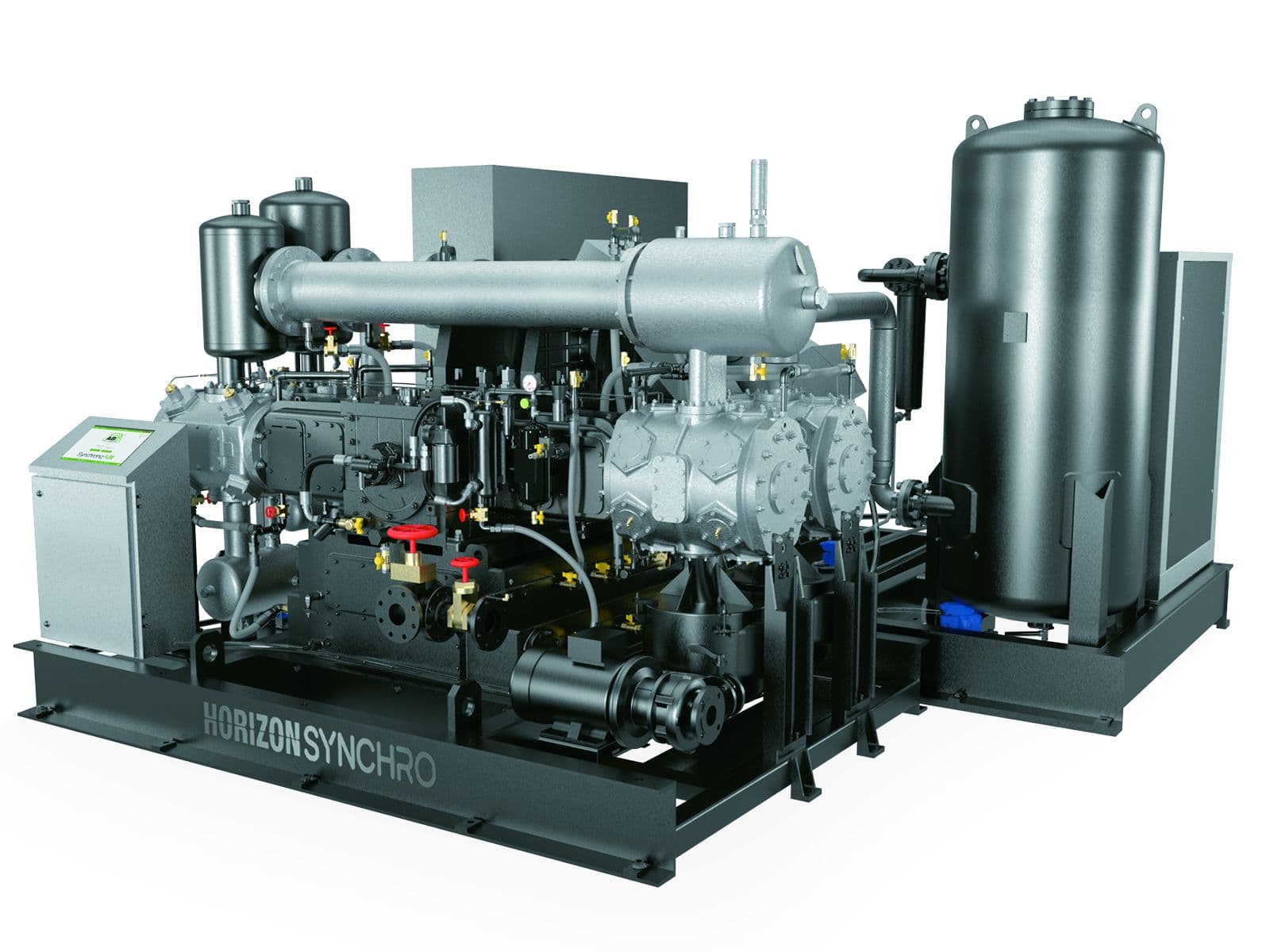
Introduction to PET Bottle Compressor
Polyethylene Terephthalate (PET), a versatile and widely used thermoplastic, is essential in manufacturing various consumer product containers, notably bottles. In this production, PET bottle air compressors are crucial. They function by blowing high-quality air at significant pressures, typically ranging from 25 to 40 barg, into PET preforms. PET air compressor is pivotal in shaping these preforms into bottles of desired sizes and forms.
Advantages of Using PET for Bottle Production
Lightweight: PET’s lightweight nature, essential for processes using pet air compressors, offers a notable advantage over heavier glass packaging. A standard 2-liter PET container, weighing about 20 grams, greatly reduces transportation costs, handling difficulty, and carbon emissions during shipping. For consumers, this translates to greater convenience in carrying and using products packaged in PET, highlighting the efficiency of lightweight PET in tandem with specialized compressors for PET blowing. Versatile Molding: PET is highly adaptable in terms of design and form. It can be molded into a wide variety of shapes and sizes, allowing for customization according to the specific needs of products and brands. This versatility extends to creating unique and attractive designs with help of PET compressors that can set products apart on retail shelves, offering significant marketing advantages. Environmental Friendliness: PET’s recyclability is a crucial aspect of its environmental appeal. It can be recycled and reused to make new PET bottles or other products, thereby reducing waste and the need for new raw materials. This recyclability makes PET a more sustainable packaging option compared to many other plastics and aligns with growing consumer and regulatory demands for environmentally friendly packaging solutions. Shelf Appeal and Safety: PET’s chemical inertness ensures the taste and quality of its contents remain unaltered, vital in processes using compressors for blow moulding and moulding air compressors, especially with food and beverages. Its shatter-proof nature also makes it safer than glass, reducing breakage risks in environments where moulding air compressors are used.The PET Bottle Blowing Process
Transforming PET Resin: The process starts with PET resin, a crystalline, opaque, and brittle material that softens at about 245°C. This resin is first dried and then molded into a preform, which is essentially a test-tube-shaped piece of PET. High-Pressure Air Molding: The preform is then heated and placed in a PET blow molding machine. Here, high-pressure air (25 to 40 barg) is blown into the preform, expanding it to fit the shape of the mold. This step transforms the preform into the final bottle shape. Single-Stage vs. Two-Stage Process: There are two primary methods for this process:- Single-Stage Process: In this method, the production of preforms and the final bottle blowing are integrated into one machine. This is typically used for lower-volume production and allows for greater flexibility in bottle design changes.
- Two-Stage Process: This is more common in high-volume production settings. Here, the creation of preforms and the blowing of these preforms into bottles are done in separate machines. This method is more efficient for producing large quantities of bottles, with some PET bottle compressor capable of producing over 70,000 bottles per hour.
Innovative Solutions with CRU AIR + GAS and Horizon Synchro Compressors
At CRU AIR + GAS, our dedication to innovation and quality in the compressed air and gas industry is evident, particularly through our collaboration with products like the Horizon Synchro compressors, moulding air compressors, and PET Blow Air Compressors. This partnership underscores our commitment to:
Advanced Technology: The Horizon Synchro PET air compressors are renowned for their cutting-edge technology, ensuring efficiency and reliability in various industrial applications. Versatile Options: Catering to diverse needs, these PET compressors offer oil-flooded and oil-free options, showcasing adaptability and performance. Comprehensive Services: Beyond compressors, we specialize in:- Installation and distribution.
- Supply of on-site nitrogen generators, PET blow moulders, and chillers.
- Airend overhauls and nitrogen demand audits.
- 24/7 emergency support.
The PET bottle manufacturing industry, advanced by innovative methods and equipment like Horizon Synchro compressors, benefits from CRU AIR + GAS’s expertise in pet air compressor installation and air compressors for PET blowing. As a leader in this field, CRU AIR + GAS not only offers top-notch compressor technology but also provides services like installation, emergency support, and efficiency audits. We’re committed to enhancing our clients’ efficiency and sustainability in PET bottle production. Choose CRU AIR + GAS for innovation and excellence in this industry.